
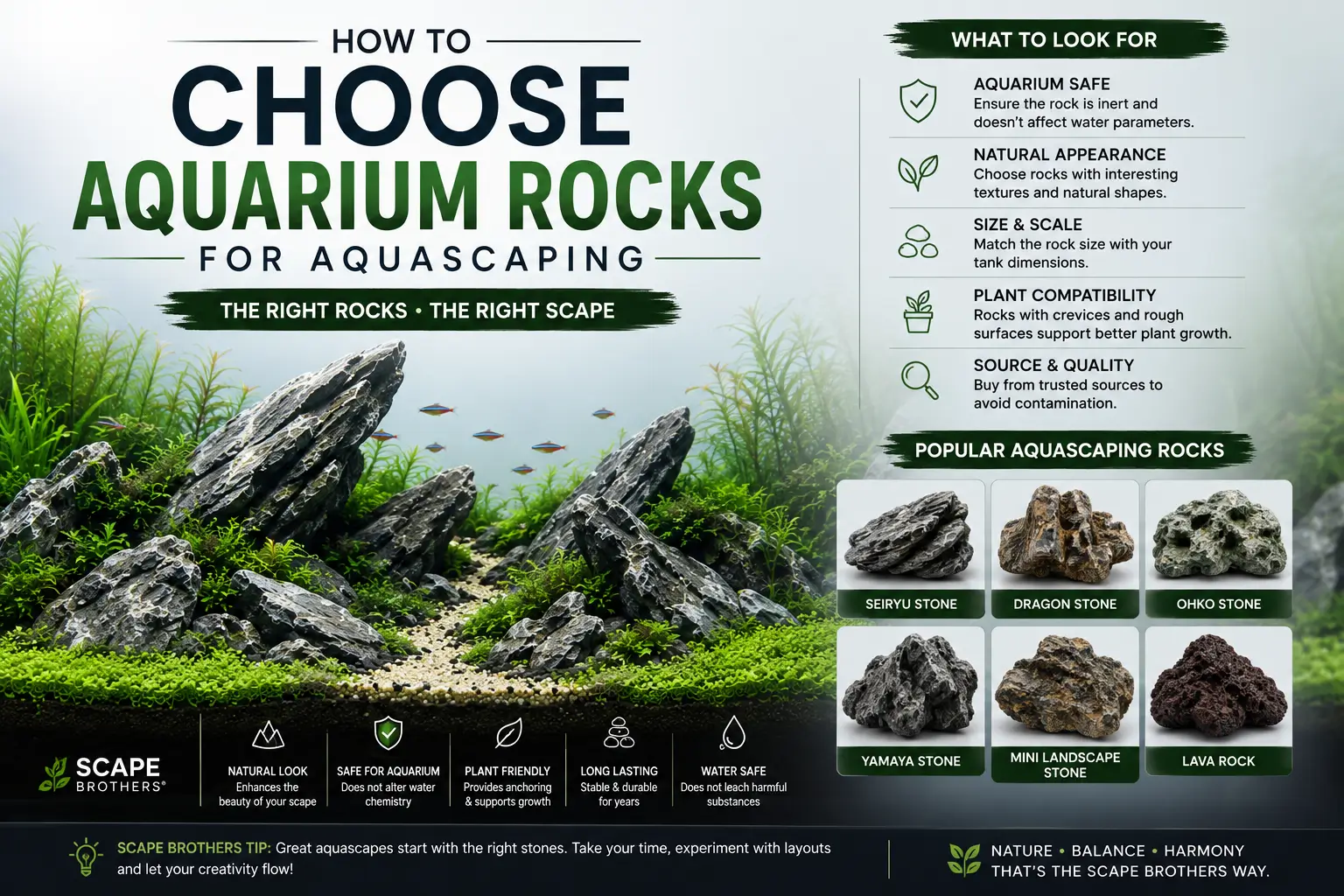
How to Choose Aquarium Rocks for Aquascaping
Rocks are one of the most important elements in an aquascape.
They create structure, establish the composition and give the aquarium its sense of scale and depth.
A good selection of rocks can make an ordinary planted aquarium look like a carefully designed underwater landscape.
But choosing aquarium rocks isn’t simply about picking the most attractive stone.
You also need to consider size, shape, texture, colour, composition and how the rock will interact with your water and livestock.
Here’s how to choose the right rocks for your aquascape.
Why Are Rocks Important in Aquascaping?
Rocks form the backbone of many aquascapes.
They can be used to create:
- Mountains
- Cliffs
- Islands
- Valleys
- Canyons
- Slopes
- Pathways
- Focal points
They also provide surfaces where plants and mosses can eventually grow.
In styles such as Iwagumi, rocks are the main subject of the aquarium.
In Nature Aquarium layouts, rocks can work together with driftwood and plants to create a natural landscape.
Popular Aquarium Rocks
Aquascapers use many different types of rocks.
Some popular choices include:
Seiryu Stone
Seiryu is well known for its dramatic texture, sharp formations and attractive blue-grey appearance.
Its natural cracks and layered structure make it particularly popular for Nature Aquarium and Iwagumi-style layouts.
It can influence water chemistry, so always consider the requirements of your livestock and plants before using it.
River Stones
River stones generally have smoother shapes created by natural erosion.
They can create a softer, more relaxed appearance and work particularly well for stream, river or natural-style layouts.
Lava Rock
Lava rock is lightweight and has a porous, irregular texture.
Its rough surface can also provide excellent attachment points for moss and other plants.
Other Aquascaping Stones
There are many other suitable rocks used by aquascapers.
The important thing is not simply the name of the rock, but whether its properties and appearance suit your aquarium.
How to Choose the Right Rock Shape
Don’t choose rocks individually.
Think about how the entire group will look together.
Look for:
- Similar texture
- Related colours
- Complementary shapes
- Different sizes
- Consistent visual direction
Your main stone should generally be the strongest visual element.
Smaller stones can then support the composition.
The Main Stone
Many aquascapes benefit from having one dominant rock.
This is often called the main stone or focal stone.
It should attract attention without looking completely disconnected from the rest of the layout.
Once you’ve selected it, arrange supporting rocks around it.
Avoid making every rock exactly the same size.
Creating Depth With Rocks
One of the easiest ways to make an aquarium appear deeper is to use rocks of different sizes.
Larger stones can be positioned closer to the viewer, while smaller stones can be used farther back.
You can also create a sloping substrate that rises toward the rear of the aquarium.
This creates perspective.
Should Aquarium Rocks Be Tested?
Yes.
Before adding unfamiliar rocks to your aquarium, it’s sensible to identify the material and understand whether it can affect:
- pH
- KH
- GH
- Water hardness
Some rocks contain minerals that can alter water chemistry.
This isn’t automatically bad.
It simply means you should choose rocks that are appropriate for your particular aquarium and livestock.
Cleaning Aquarium Rocks
Always clean rocks before placing them in your aquarium.
Remove:
- Loose dirt
- Dust
- Soil
- Organic debris
Rinse them thoroughly with clean water.
Avoid using household detergents or soaps.
For stubborn debris, a suitable brush can help.
How Many Rocks Do You Need?
There is no fixed number.
The amount depends on:
- Aquarium dimensions
- Aquascaping style
- Rock size
- Composition
- Amount of open space
Buying too many rocks can actually make aquascaping harder.
Start with a few strong pieces and build the composition around them.
Common Rock-Selection Mistakes
Using Too Many Different Rock Types
Combining completely unrelated colours and textures can make the aquascape look chaotic.
Using Rocks of Identical Size
A group made entirely from similar-sized stones can look artificial.
Making Everything Symmetrical
Natural landscapes rarely have perfect symmetry.
Choosing Rocks Without Considering Water Chemistry
A beautiful rock isn’t necessarily suitable for every aquarium.
Burying Too Much of the Rock
If too much of the rock disappears into the substrate, you lose much of its visual impact.
Matching Rocks With Plants
Think about how the aquascape will look after several months.
Plants should complement the hardscape rather than completely hide it.
For example:
- Moss can soften sharp rocks.
- Low plants can frame the base.
- Stem plants can create a background.
- Epiphytes can attach directly to rocks.
- Carpeting plants can connect separate stones visually.
The best aquascapes often look as though the plants and rocks belong together naturally.
Final Thoughts
Choosing aquarium rocks is part science and part design.
You need to consider the rock’s effect on water chemistry, but you also need to think like a landscape designer.
Look at shape, texture, colour, scale and composition.
Most importantly, don’t rush.
Spend time moving rocks around while the aquarium is still dry.
A small change in angle or position can completely change the appearance of an aquascape.
At Scape Brothers®, our goal is to help aquarists find suitable hardscape materials for creating beautiful planted aquariums.
Choose your rocks carefully. Build your composition patiently. Let the plants complete the landscape.